Kathleen Jacobs / Young-Jae Lee
Galerie Karsten Greve AG St. Moritz
Monday - Friday 10 am – 1 pm / 2 pm – 6.30 pm
Saturday 10 am - 1 pm / 2 pm - 6 pm
Opening
on Saturday,October 3, 2026, 5 pm – 7 pm
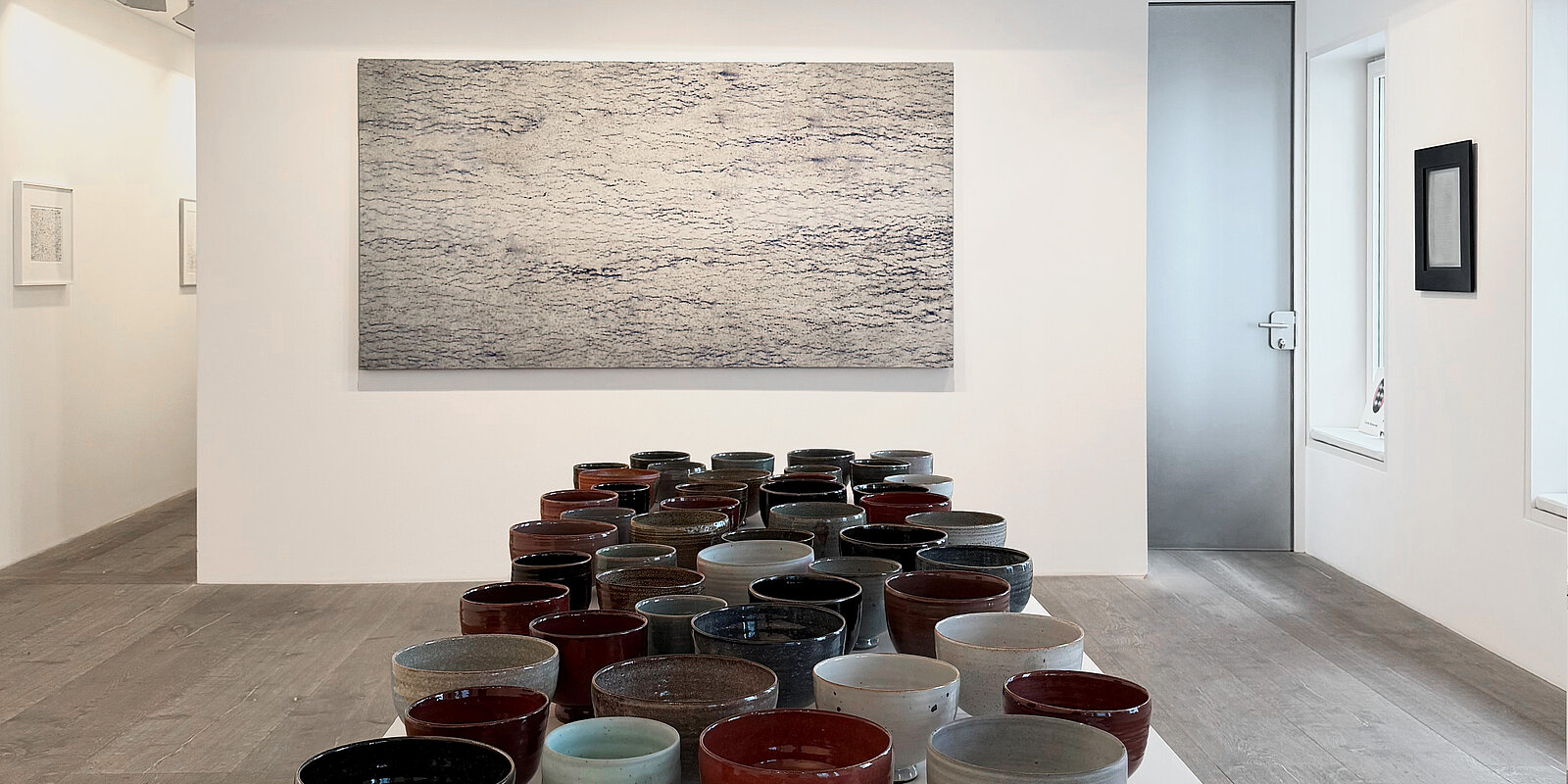
With Kathleen Jacobs and Young-Jae Lee, Galerie Karsten Greve brings together two artists whose works reveal a particular affinity. Jacobs’ painting and Lee’s ceramics unfold a dialogue on nature and form, time, touch and transformation. The rhythmic articulation of their surfaces and the interplay between density and open space connect their respective bodies of work across the boundaries of their media.
Both artists are united by a profound understanding of material and form, as well as a deliberate openness to the unforeseen. Nature becomes a creative partner: its structures and forces participate directly in the making of the work. Artistic mastery also manifests itself in an intuitive understanding of when to intervene and when to allow a process to take its course.
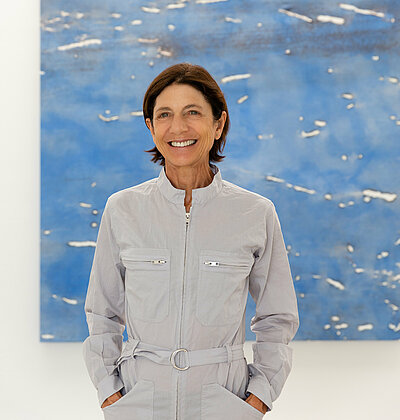
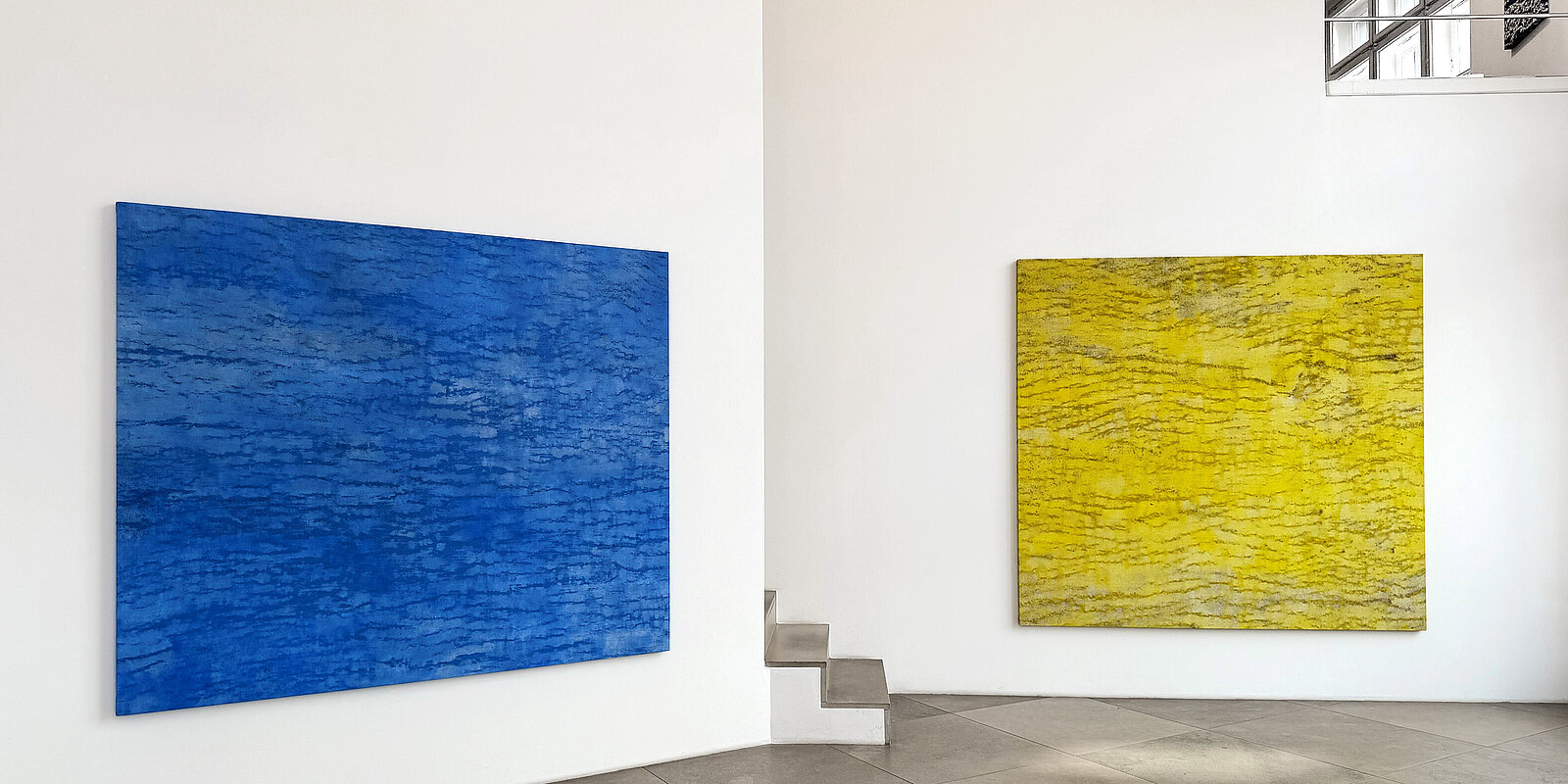
At the intersection of imprint, painterly gesture and abstraction, Kathleen Jacobs develops a distinctive visual language informed by her engagement with Chinese painting and calligraphy, as well as Japanese woodblock printing techniques. On linen wrapped around tree trunks, rubbings, layers of paint and traces of weathering accumulate over months, sometimes years. By rotating the vertically recorded bark textures into a horizontal orientation and working them further through painting, she creates richly layered pictorial spaces. These evoke landscape and distance without resolving into an identifiable motif. Time takes on visible form; the traces of the tree open into atmospheric expanses. This collaboration with nature also resonates with Jacobs’ engagement with Taoism.
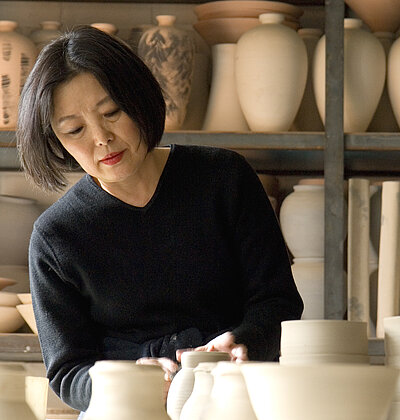
Young-Jae Lee is one of the foremost masters of contemporary ceramics. Her work brings Korean vessel traditions into dialogue with the formal sensibility of European modernism. Her spindle vases are constructed from separately wheel-thrown bowl forms, their join remaining visible as a fine seam. Inspired by Goethe’s poem “Gingo biloba”, the relationship between unity and duality finds sculptural expression in these works. The bowls shown alongside them reveal, within their simple underlying form, a rich spectrum of subtle variations in proportion, contour and glaze.
Following the first firing, the vessels are coated with glazes made from natural mineral constituents. Only during the second firing do these acquire their final colour and material depth. The interaction of clay, glaze and heat produces nuances that even the most experienced artist cannot fully anticipate. Each work unites precision of form with the unique circumstances of its making.
The atmospheric breadth of the paintings brings the concentrated physical presence of the vessels into focus; their quiet presence, in turn, heightens our awareness of the shifting depths of the paintings. The traces of bark find an echo in the markings of the glaze. From these differences emerges a shared rhythm – a poetics of becoming, in which form and transformation shape one another.
During the golden weeks of autumn in the Engadin, the exhibition invites visitors to extend their encounter with the landscape through art. Between painting and ceramics, a space opens in which the gaze can linger – and nature makes itself present in another way.