Qiu Shihua:
Galerie Karsten Greve, Cologne
Tuesday - Friday, 10 am - 6.30 pm
Saturday, 10 am - 5 pm
Opening
Friday, January 30, 2026, 6 pm - 8 pm
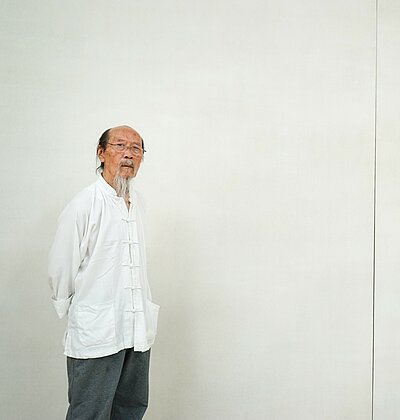
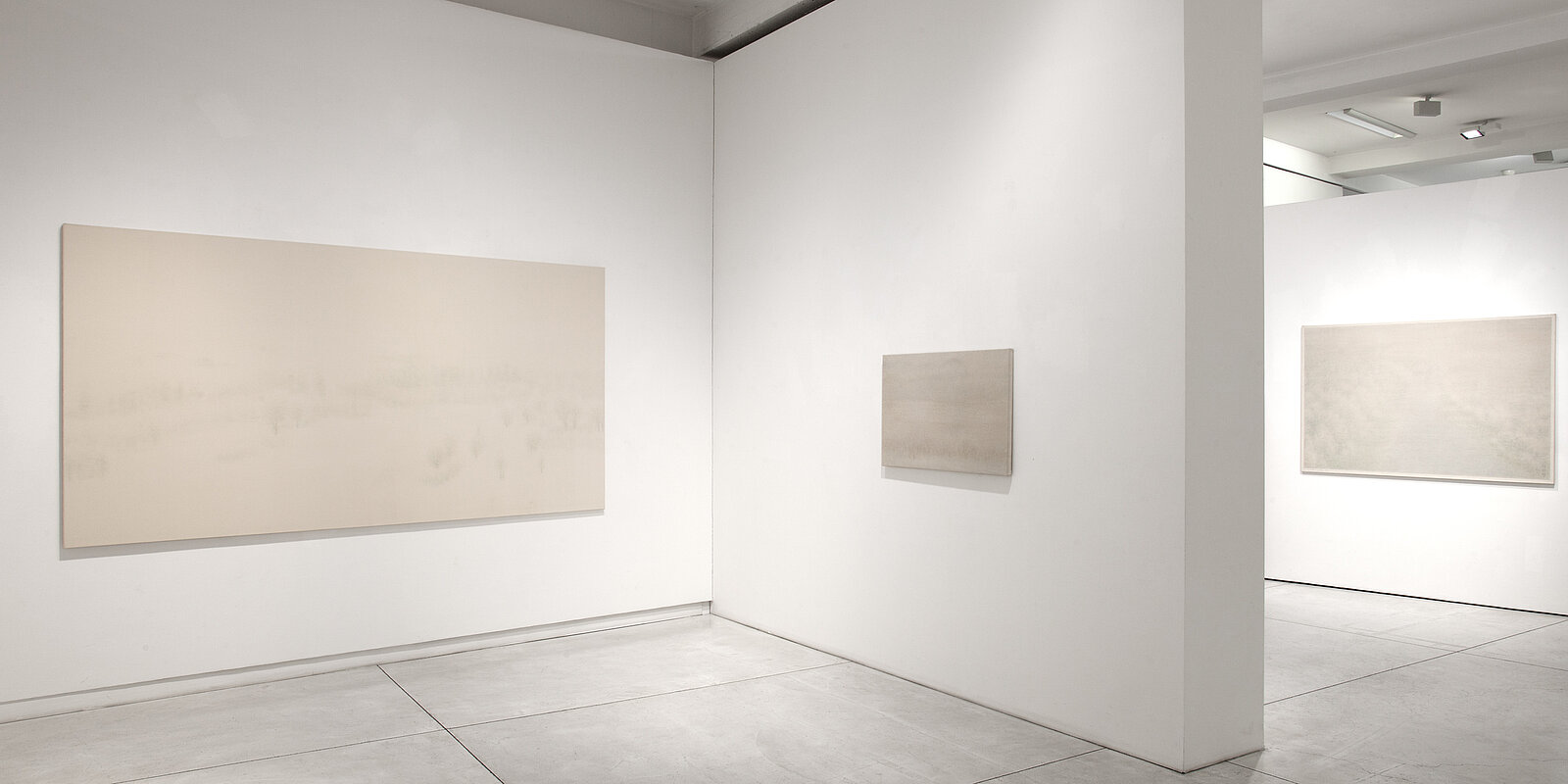
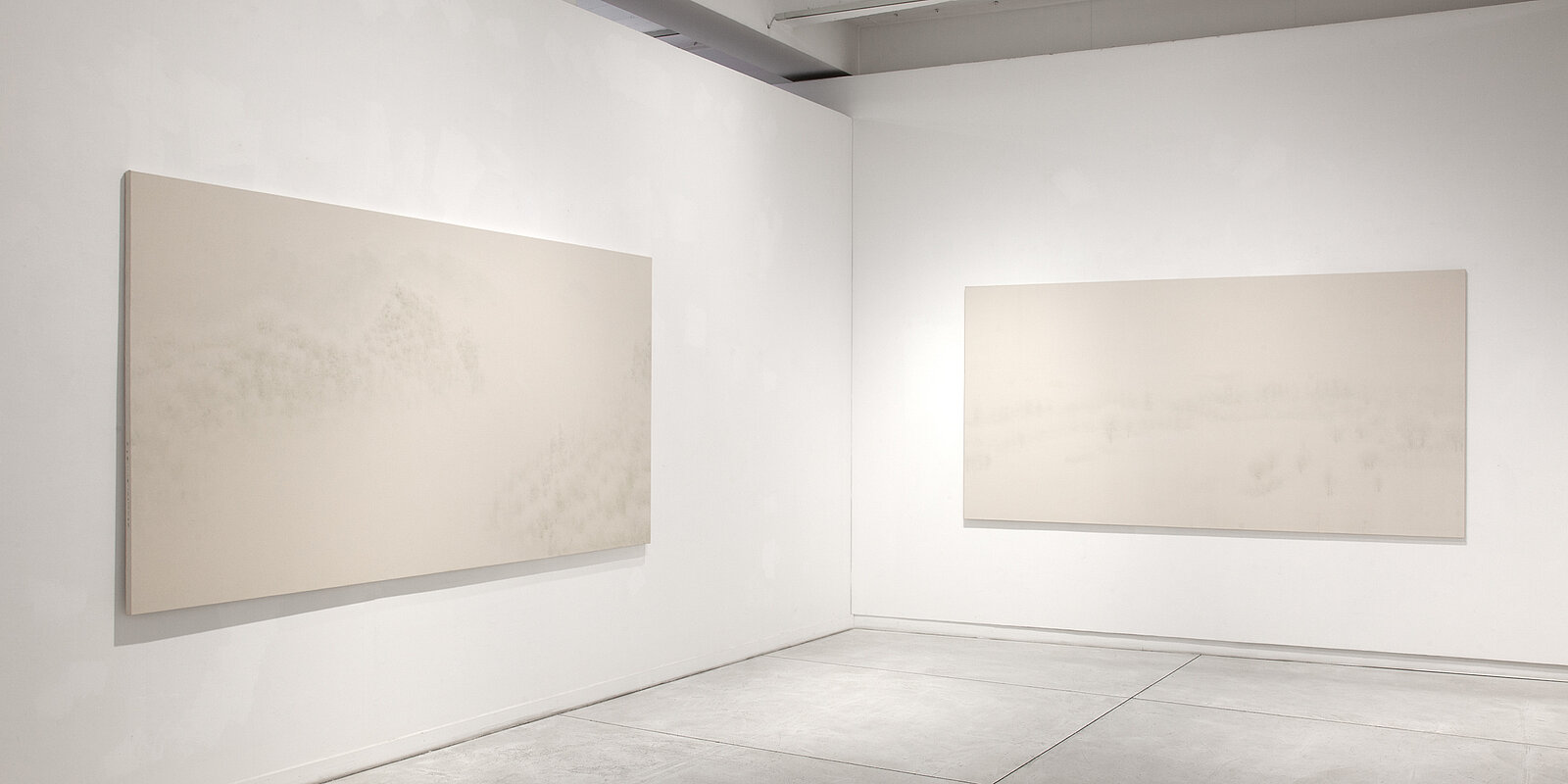
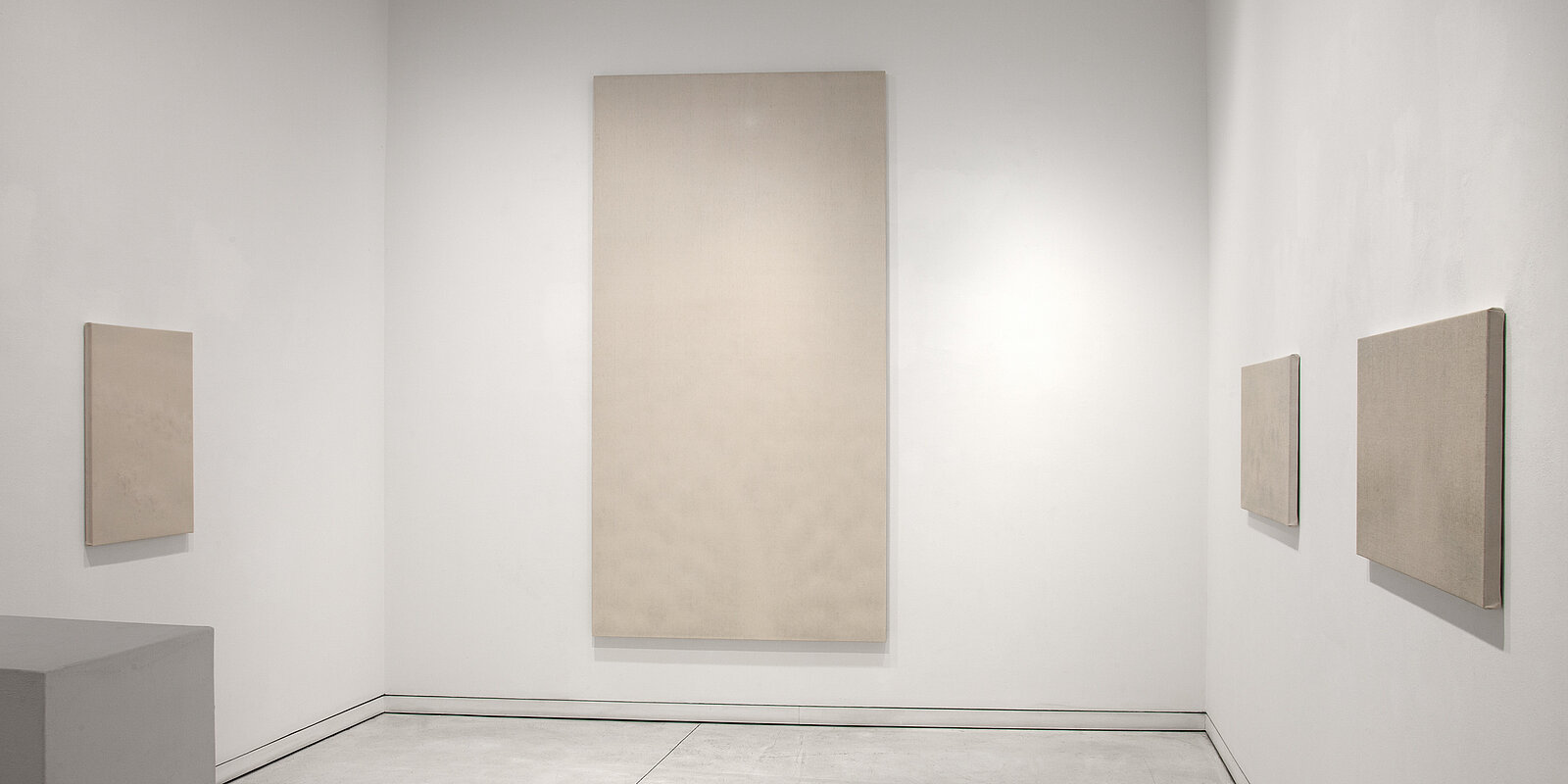
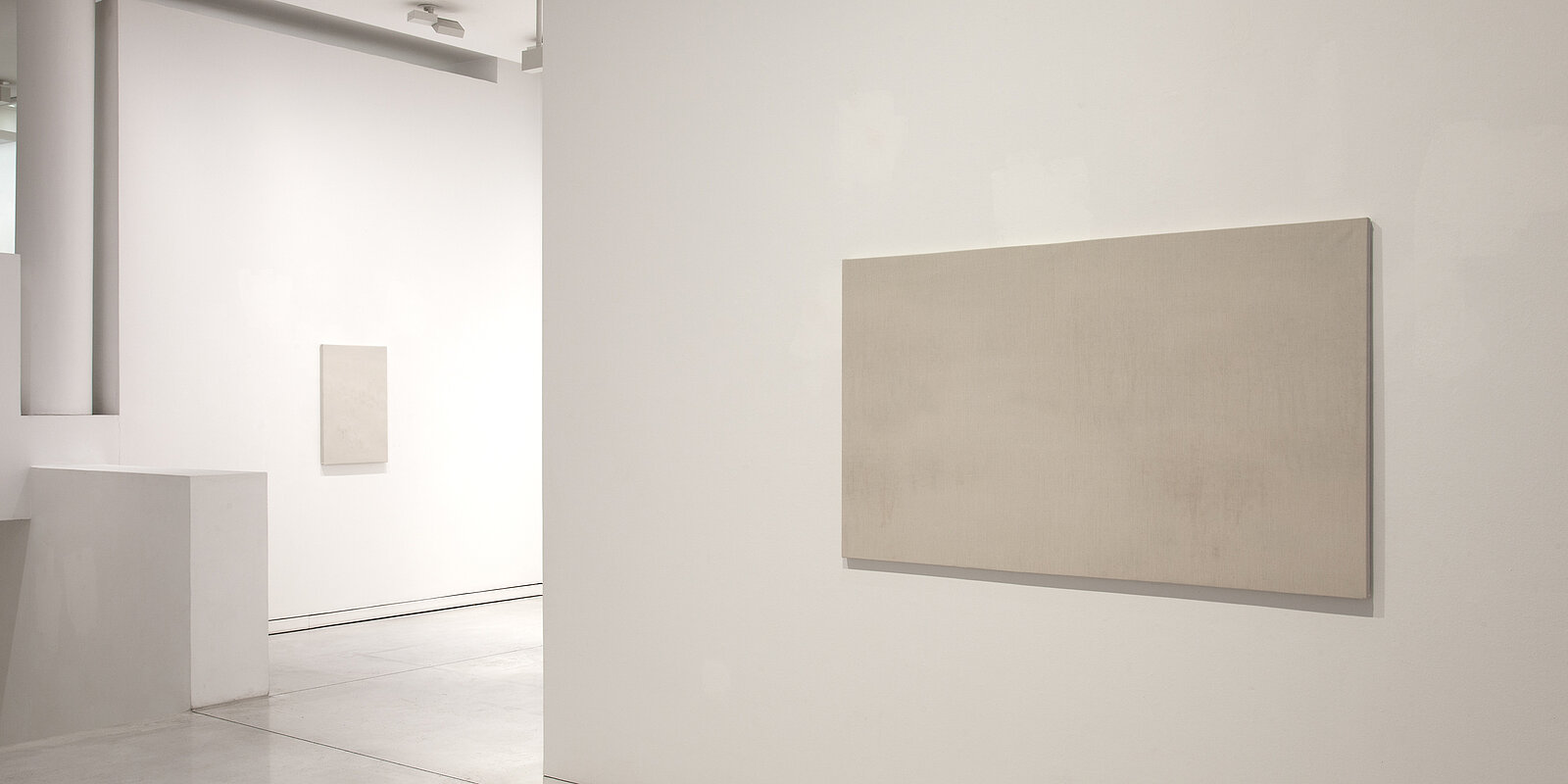
With its fifth solo exhibition at the Cologne gallery, Galerie Karsten Greve pays tribute to Qiu Shihua (1940–2025), presenting a curated selection of important works on canvas and paper, many of them shown publicly for the first time. The works originate from a group entrusted to the gallery by the artist during his lifetime. The exhibition honors an exceptional oeuvre in which, over several decades, Qiu Shihua developed a singular position between the millennia-old tradition of Chinese landscape painting and a radically reduced pictorial language. His works articulate an artistic stance in which perception, time, and philosophy are inseparably intertwined.
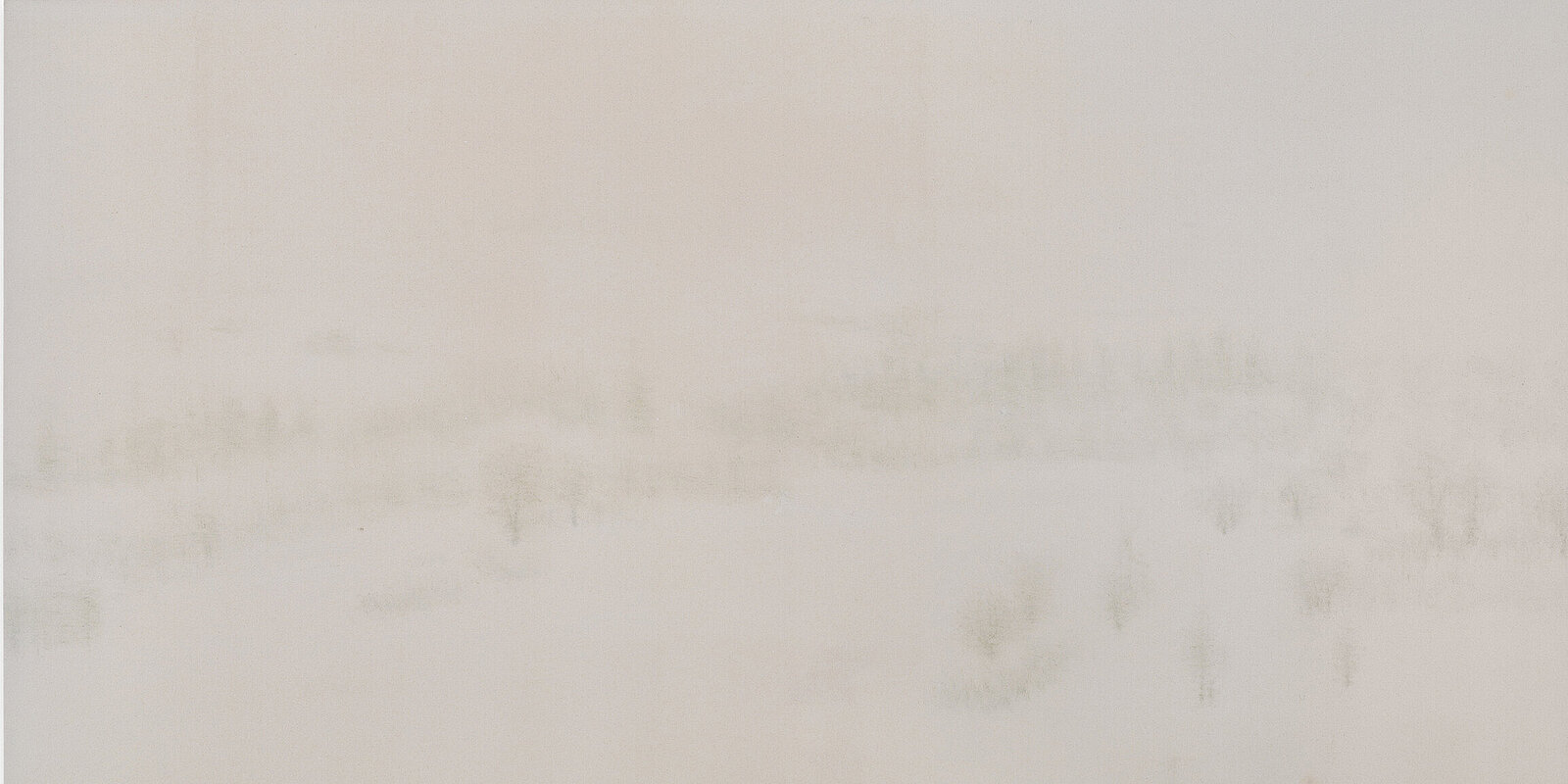
At first glance, Qiu Shihua’s paintings appear almost empty: luminous, restrained pictorial fields in which color and form seem to dissolve. Yet through sustained, concentrated, indeed contemplative and meditative, viewing, they gradually begin to reveal themselves in subtle nuances. Mountains, forests, and lakes cautiously emerge from the finest layers of color, always fragile and fleeting, only to withdraw again in the next moment. Seeing becomes a time-bound process that resists acceleration, whose outcome remains inherently ephemeral. His painting does not unfold at a single glance, but rather as a gentle coming-into-being and fading-away, demanding attention and devotion.
The works elude immediate legibility and remain in a state of continuous transformation. This openness of perception, and the perpetual slipping away of the motif, lead into a condition that refuses fixation: one that lingers instead in suspension, poised between presence and absence.
„My paintings are like a door, through which anyone can go through.“
- QIU SHIHUA
In the radical reduction of his pictorial language, a meditative depth emerges that resonates with Taoist thought. In Taoism, to which Qiu Shihua aligned himself, life is understood as part of a natural, continuously transforming whole. At its center lies the Dao, an elusive principle from which all things arise and to which all things return. Apparent oppositions such as the visible and the invisible, emptiness and fullness, stillness and transformation are not conceived as contradictions, but as complementary forces within an ongoing process of change.
Rooted in the classical tradition of shan shui painting, Qiu Shihua translates its philosophical foundations into a radically reduced pictorial language. Shan (mountain) and shui (water) function less as concrete motifs than as a complementary unity of opposing forces. Within this tension between stillness and movement, density and emptiness, a form of painting unfolds that is not representation but experience. Qiu Shihua’s images open a space for quiet contemplation, in which perception is revealed as an open, never-ending process, and the invisible plays a role as formative as the visible. He invites viewers to slow down their gaze and consciously engage with the fleeting nature of the moment. His painting demands this experience and thus stands in deliberate opposition to the visual overstimulation of the present: in the here and now of seeing lies the timeless relevance of his work.

Qiu Shihua was born in 1940 in Zizhong, in the Chinese province of Sichuan, and passed away in August 2025. Driven by curiosity, he taught himself painting by observing and depicting what he saw. He studied at the Xi’an Academy of Fine Arts in Shaanxi Province, where he graduated in 1962. His education was shaped by traditional Chinese painting as well as by Socialist Realism, in a China that was largely closed off from the Western world and its art. During the 1970s, amid the Cultural Revolution, Qiu Shihua worked as a poster painter in a cinema in the city of Tongchuan. In 1984, he returned to the Xi’an Academy of Fine Arts. Travels to Europe played a decisive role in the development of his painterly language. Around the same time, he journeyed into the Gobi Desert and began to engage deeply with Taoism, a philosophy to which he ultimately committed himself. This marked a profound shift in his artistic practice: he no longer painted outdoors, but instead devoted himself to landscape painting in the studio. His works increasingly became impressions of memory and natural atmospheres rather than representations of physical reality. Qiu Shihua adopted the Taoist concept of “acting through non-action,” in which things come into being by following their own course, or rather, conversely, a non-action that emerges through action. From this creative process arose a body of painting that, through its visible absence, poses questions and invites reflection.
During the 1990s, his first solo exhibitions were held in galleries in China and Taiwan. His works were also presented at major international exhibitions, including the São Paulo Biennial (1996), where he was a guest of honor; the 48th Venice Biennale (1999); the 2nd Berlin Biennale (2001); and the 5th Shanghai Biennale (2004). His work has since been shown in numerous international exhibitions, among them at the Zachęta National Gallery of Art, Warsaw (2003); a touring exhibition at the Kunstmuseum Bonn (2005), the Hamburger Kunsthalle (2006), and the Museum der Moderne Salzburg (2007); the Museum Franz Gertsch, Burgdorf (2006); the Fundació Joan Miró, Barcelona (2008); the Kunstmuseum Luzern (2011); the Metropolitan Museum of Art, New York (2013); the Vancouver Art Gallery (2014); Marta Herford (2015); the Noordbrabants Museum, ’s-Hertogenbosch (2018); the Long Museum, Shanghai, and the Museum Rietberg, Zurich (2020); the Akademie der Künste, Berlin (2021); the Museum für Ostasiatische Kunst, Cologne (2022–23); and the Kunsten Museum of Modern Art, Aalborg (2022).