Louise Bourgeois:
Galerie Karsten Greve Köln
Tuesday - Friday, 10 am - 6 pm
Saturday, 10 am - 5 pm
Opening
on Friday, September 4, 2026, 6 pm - 9 pm
on the occasion of DC Open Galleries
Opening hours during DC Open Galleries:
Friday, September 4, 10 am - 9 pm
Saturday, September 5, 10 am - 7 pm
Sunday, September 6, 1 pm - 5 pm
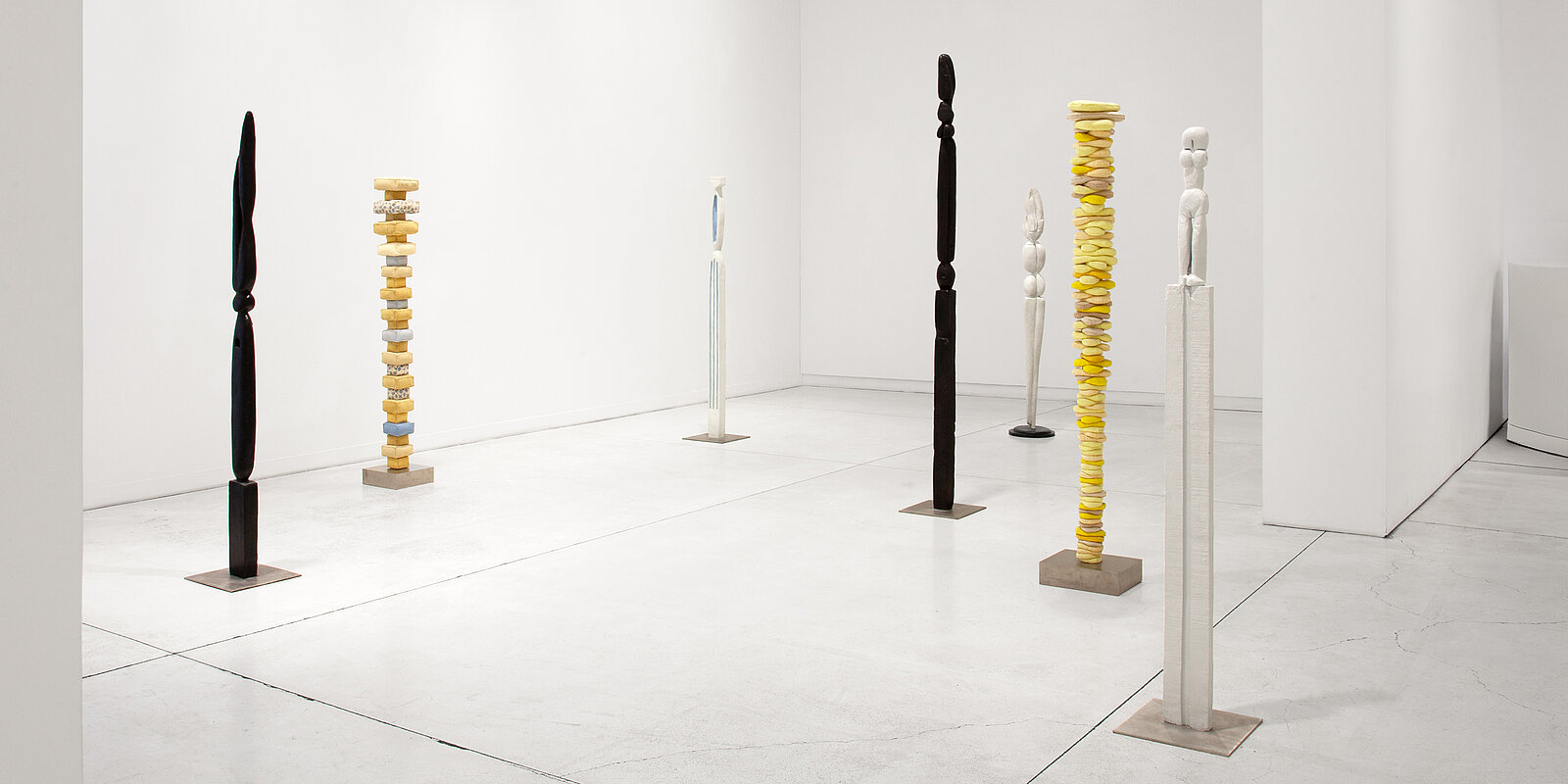
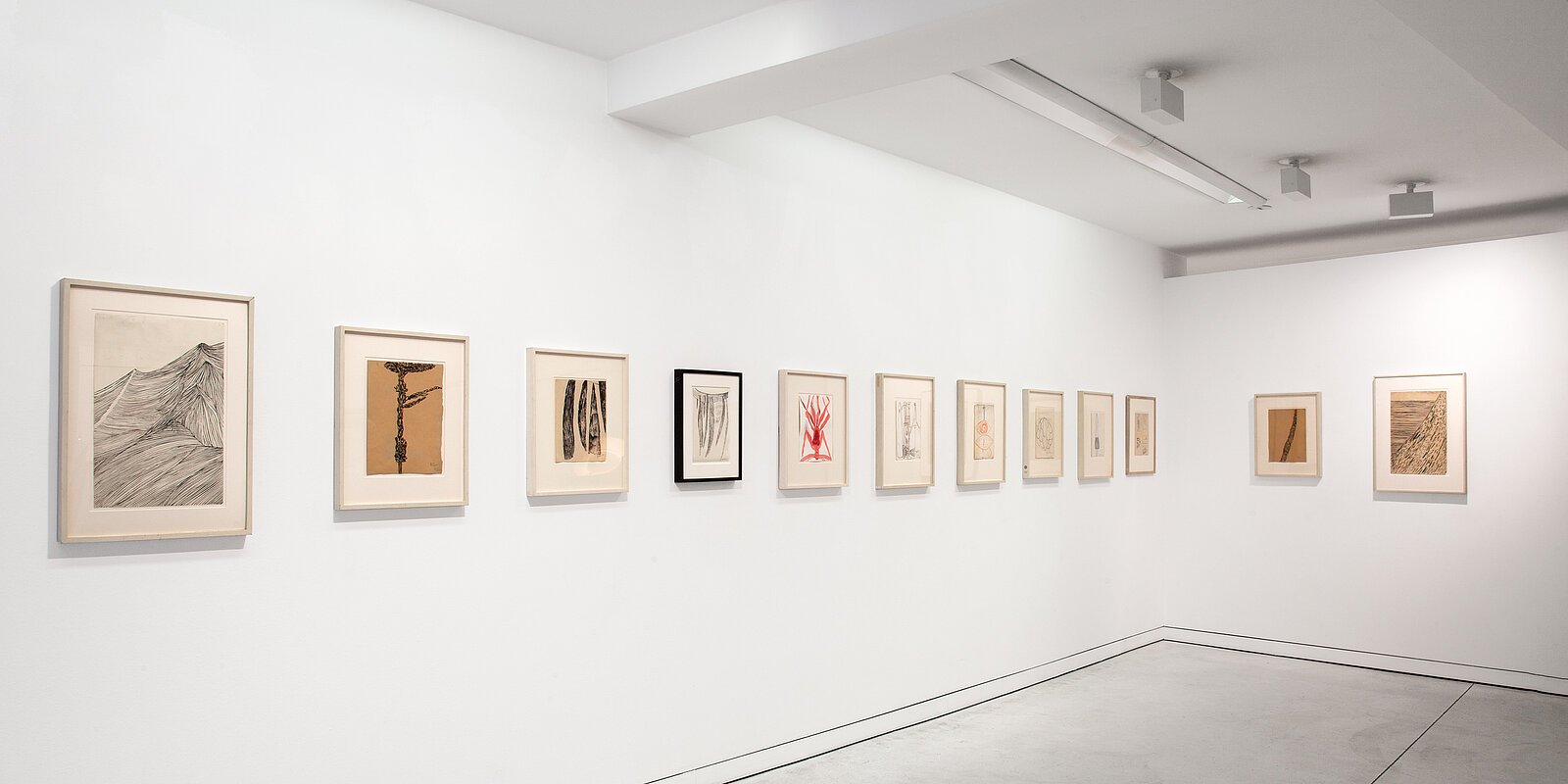
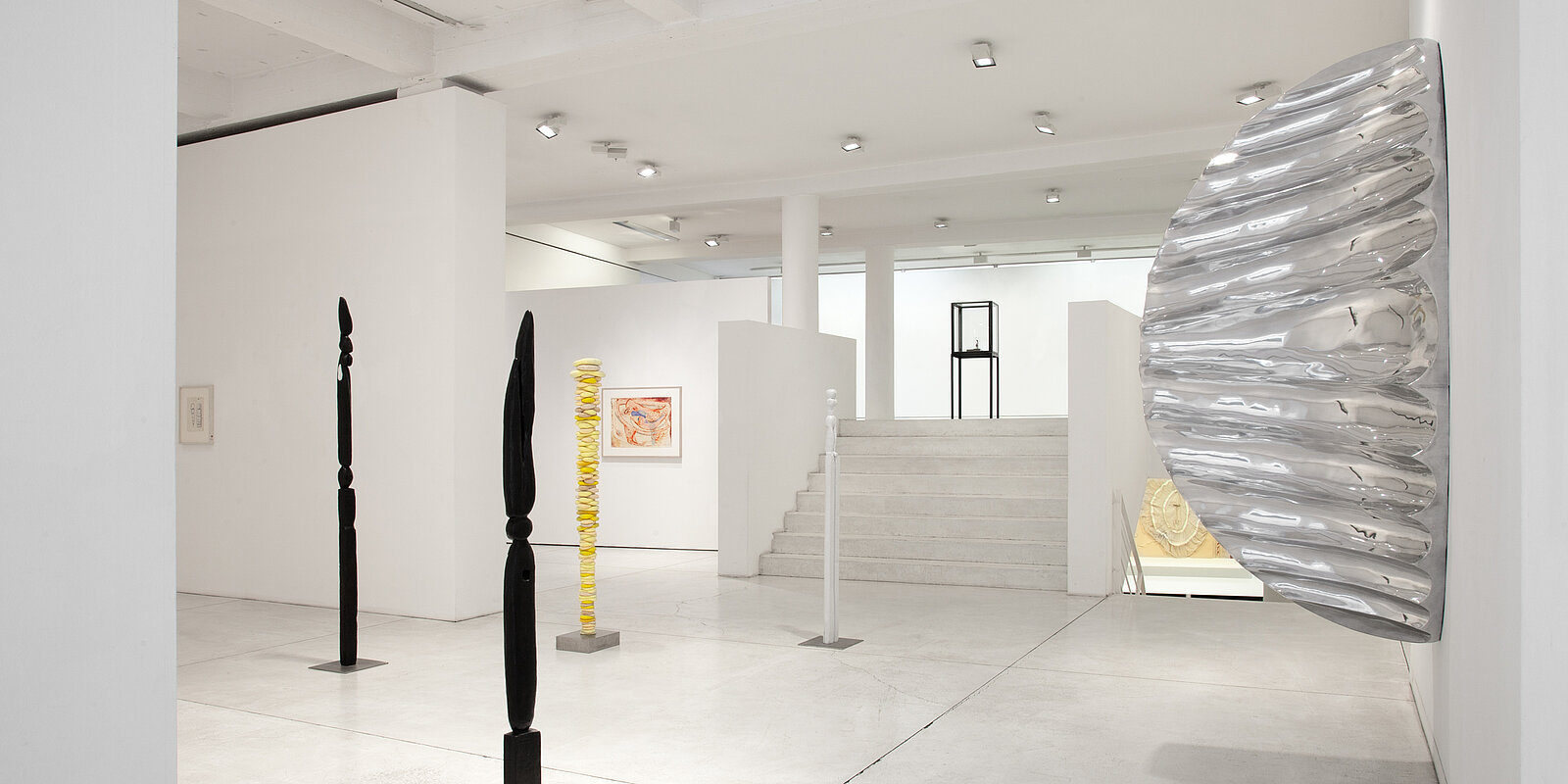
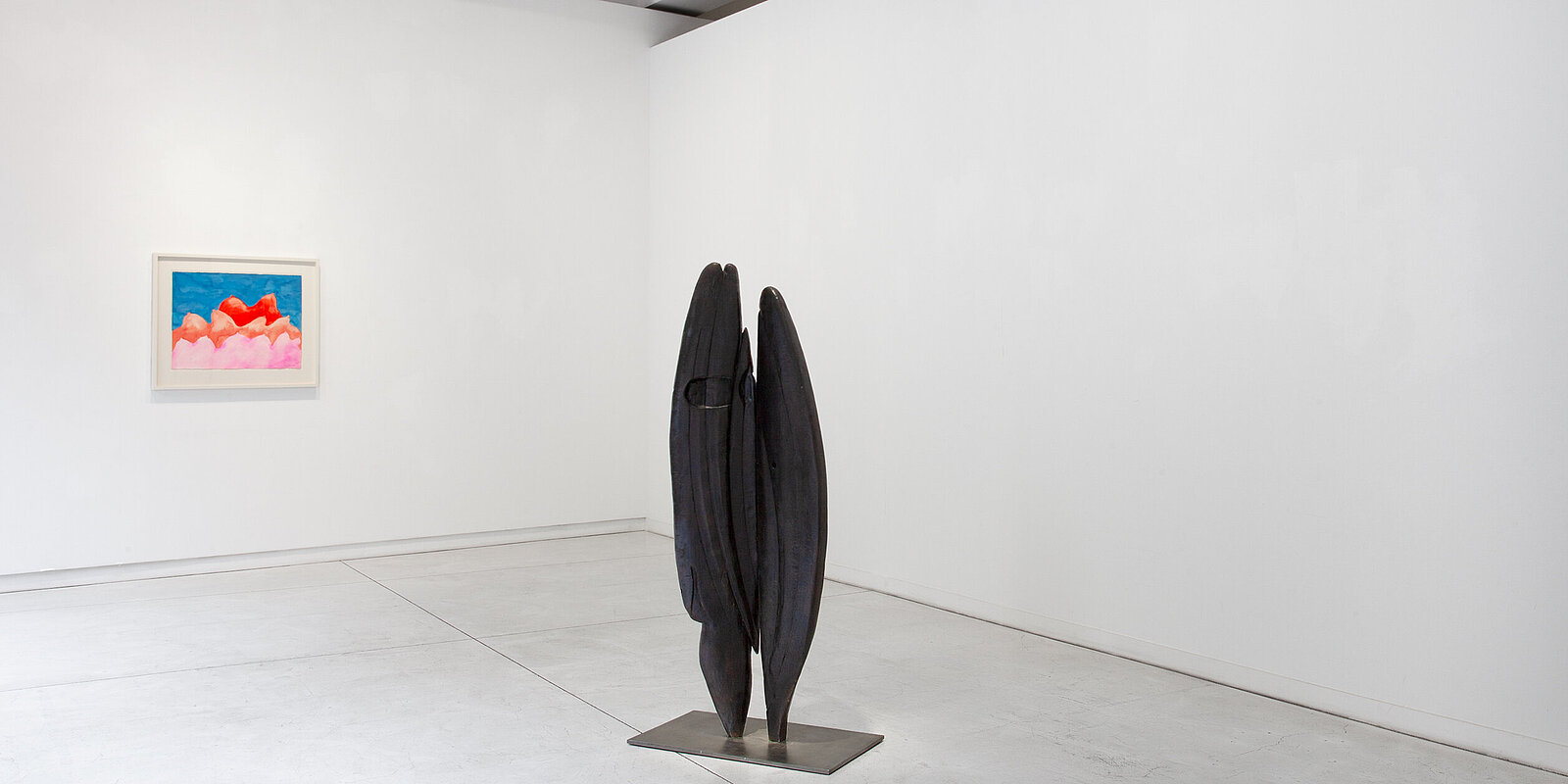
Galerie Karsten Greve Köln presents a comprehensive solo exhibition by Louise Bourgeois. On view are approximately 50 works from the artist's sculptural and graphic oeuvre, created between 1947 and 2008. Almost a decade after the last presentation of her works on paper at the Cologne gallery, the exhibition opens a dialogue with Bourgeois' sculptural practice while revealing new perspectives. The presentation continues the tradition of the long-standing collaboration between Louise Bourgeois and Karsten Greve, which began with Bourgeois' first solo exhibition at Galerie Karsten Greve in Cologne in 1990. It highlights an artistic oeuvre of undiminished relevance that has had a lasting impact on the history of art and continues to resonate to this day.
Over the course of several decades, Louise Bourgeois developed a distinctive visual language in which her personal history became inseparable from universal questions of identity, the body, desire, loss, and human relationships. Her work resists clear categorization, moving fluidly between sculpture, installation, drawing, painting, and printmaking. While rooted in biographical experience, Bourgeois never understood her art as a purely private narrative. Instead, she transformed psychological landscapes, emotional wounds, and lived experience into archetypal images. Her works create a space in which individual experience and collective memory intersect.
Woman with a Secret (1947–49) belongs to Bourgeois' Personnages, a series of totemic sculptures that evoke family members and friends she left behind after emigrating from France. The years following her move to the United States were marked by profound nostalgia and by the tension between displacement and new beginnings. Inspired by the verticality of Manhattan's skyscrapers, Bourgeois created more than eighty sculptures in wood and bronze. While these works echo the soaring architecture of her new home, they also reflect the reductive formal language of modernism. Each possesses a distinct presence, emerging as an individual personality. In Woman with a Secret, one of the central themes of Bourgeois' later oeuvre appears for the first time: the figure of the woman and the mother. The sculpture intertwines memories of personal relationships with a nuanced exploration of femininity and care. Brother and Sister (1949) distils the psychological dynamics of intimacy and distance between two people, reflecting Bourgeois' enduring interest in giving sculptural form to emotional states and interpersonal relationships. Organic and anthropomorphic associations merge into an ambiguous, symbolically charged figure. In its reduced form, the sculpture becomes an emblem of a relationship in which connection and separation, protection and vulnerability, coexist simultaneously.
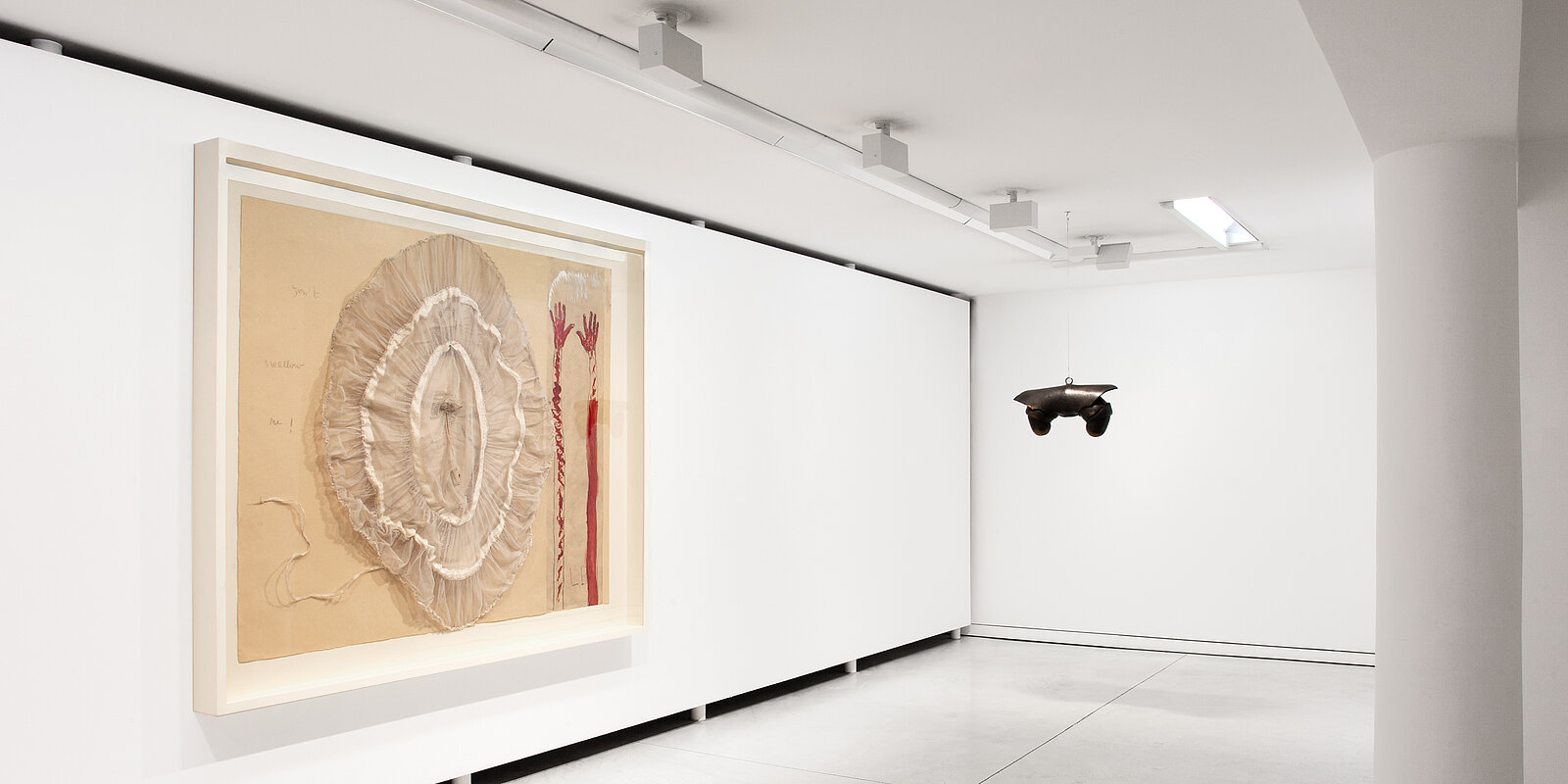
From the late 1990s onward, Bourgeois expanded her sculptural vocabulary to include textiles and fabric, although textile materials had been woven into the autobiographical fabric of her work from the very beginning. In her later years, particularly from the 2000s onward, she worked extensively with fabric and worn garments. Raised in a family that operated a workshop specializing in the restoration of historic tapestries, Bourgeois maintained a profound connection to textiles throughout her life. Her mother worked as a weaver and restorer, dedicating herself to preserving, repairing, and reconstructing damaged fabrics. From an early age, Bourgeois came to understand cloth not merely as a material but as a repository of memory and time.
In her work, sewing, mending, and joining become poetic metaphors for healing. What appears damaged is preserved, reassembled, and transformed into a new form. In the hanging sculpture Arch of Hysteria (2000), Bourgeois revisits the historical representation of so-called hysteria, familiar from the nineteenth-century photographic studies of female patients by the French neurologist Jean-Martin Charcot. She removes the motif from its medical and pathological context, transforming it into a state of emotional and physical tension. The visible seams and stitched connections evoke both injury and repair: the body emerges as a fabric inscribed with lived experience, marked by ruptures and acts of restoration, becoming a repository of emotional memory.
Alongside sculpture, drawing remained an essential mode of expression throughout Bourgeois' career, accompanying her artistic practice from its beginnings until the end of her life. Drawings, watercolors, gouaches, prints, and collages functioned as a visual diary — immediate records of thoughts, memories, and inner states. For Bourgeois, drawing was inseparable from the processes of thinking and remembering. Her early works on paper are characterized by organic, spiral, and biomorphic forms in which the boundaries between plant and human life dissolve. From the 1960s onward, her exploration of corporeality and sexuality became increasingly pronounced. Her formal vocabulary expanded to include phallic and female-coded forms that merge with organic and architectural elements. In her late work, Bourgeois returned once more to themes of motherhood and the earliest human bond. The motif of the breast became a central symbol of nourishment, protection, and dependence, while also expressing the ambivalent relationship between vulnerability and care.
More than fifteen years since Louise Bourgeois' passing, her work continues to retain its remarkable intensity. Oscillating between vulnerability and strength, memory and transformation, it offers enduring reflections on the human condition. Thirty-six years after the first presentation of Bourgeois' work in Cologne, Galerie Karsten Greve invites visitors to encounter this extraordinary artistic language once again.
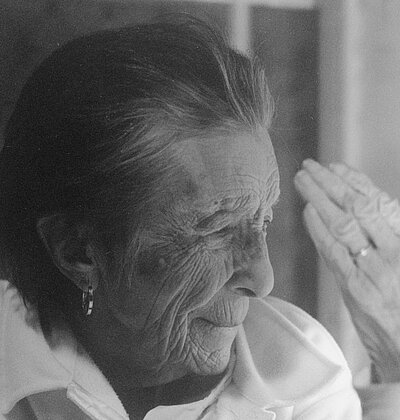
Louise Bourgeois (Paris, 1911 – New York, 2010) is widely regarded as one of the most influential artists of the twentieth and twenty-first centuries. After settling in New York in 1938, she developed over the course of seven decades a singular body of work in which personal experience, family history, and universal human concerns converge. Through sculpture, drawing, printmaking, and textile works, she explored fundamental aspects of the human condition —including the body, motherhood, desire, anxiety, and loss — transforming deeply personal experiences into a symbolic visual language. Her first solo exhibition was held in 1945 at the Bertha Schaefer Gallery in New York. Although her work initially gained recognition primarily in the United States, the landmark retrospective at the Museum of Modern Art, New York, in 1982 marked a decisive turning point in her international reception. Major exhibitions across Europe followed from 1989 onward. Galerie Karsten Greve has represented Bourgeois since 1990 and has played a significant role in promoting her work internationally through numerous exhibitions and publications. Bourgeois participated in documenta 9 in 1992 and represented at the Venice Biennale in 1993. Today, her works are held in the world's leading museum collections, including the Museum of Modern Art, New York; the Solomon R. Guggenheim Museum, New York; Tate Modern, London; the Centre Pompidou, Paris; and the Guggenheim Museum Bilbao.